Location:
Seoul, South Korea
Year:
2026
Photographer:
Chung Heeseung
Gabriel Orozco’s garden at the Leeum Museum of Art in Seoul transforms the museum’s outdoor deck into a landscape conceived as a sculptural work. Rather than introducing another monumental object into the space, the Mexican artist turns the ground itself into the medium, bringing together geometry, planting and public use.
Unveiled in April 2026, the project marks the museum’s first commissioned garden since its opening in 2004. For more than two decades, the deck was defined by monumental sculptures that established a strong vertical axis. Orozco takes a different approach, shifting the focus towards the horizontal plane and a sequence of interconnected spaces.
The garden extends across approximately 1,653 square metres. Its layout begins with a single circle, a recurring motif in Orozco’s artistic practice, which expands into a pattern of circles in different sizes. Formed from custom-cut Boryeong stone quarried in South Korea, the paving connects ten plazas, creating a continuous composition across the deck.
Each plaza has its own combination of paving, planting and seating. Rather than directing visitors towards one dominant focal point, the arrangement offers distinct settings for gathering, resting or looking out towards the surrounding city. The project also incorporates material from the site’s previous incarnation. Jarrah wood from the former deck was repurposed as exterior cladding for the museum building, extending the project’s material cycle through reuse.
For this project, Orozco draws on the East Asian tradition known as the Three Friends of Winter: pine, bamboo and plum. These plants, valued for their ability to endure the harshest season, form both the botanical framework and the conceptual basis of the garden.
Seventeen pine trees and eleven plum trees are joined by approximately 1,500 bamboo stalks. The bamboo forms a dense grove that buffers urban noise and creates a more intimate environment within the open deck. Viburnum, spiraea and parnassia contribute to a restrained planting palette, with predominantly white blossoms reinforcing the garden’s measured character. Planting establishes the atmosphere of each plaza and brings seasonal variation to the composition. Bamboo provides enclosure, while plum blossoms emerge and fade throughout the year. The garden’s character is shaped by these changes rather than by a fixed display of ornamental plants.
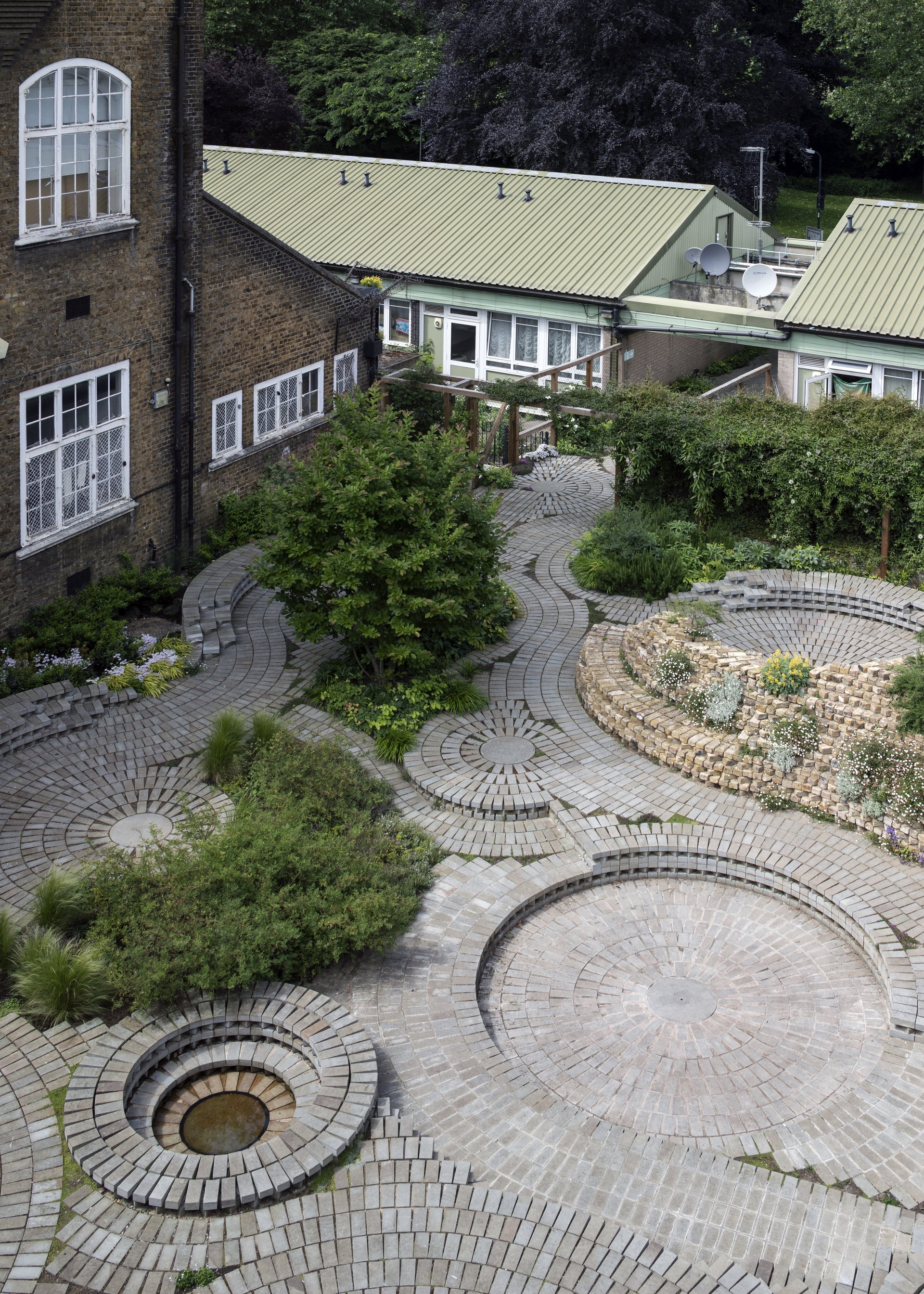
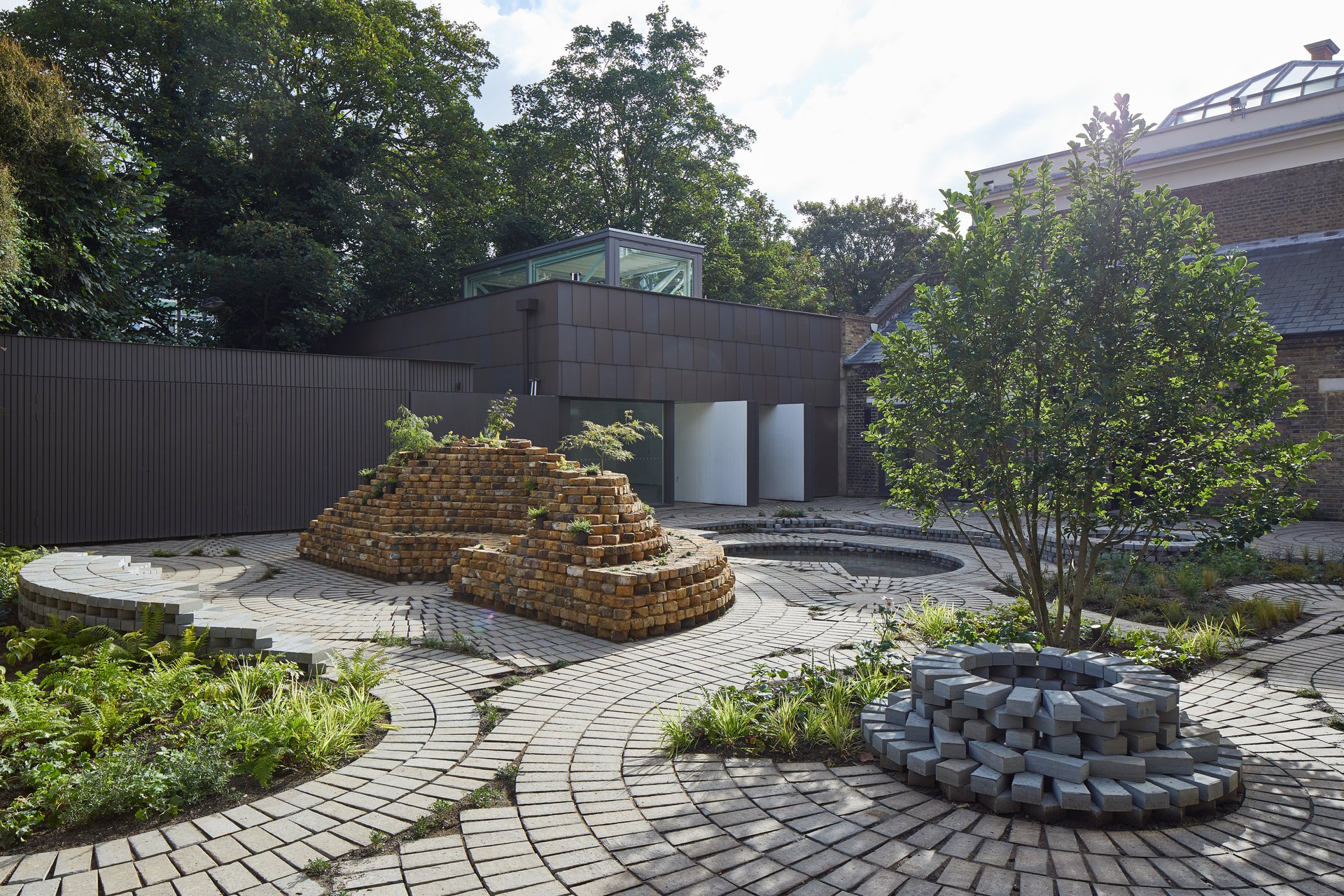
The project continues Orozco’s interest in everyday objects, geometric systems and the relationship between art and use. His garden at the South London Gallery, completed in 2016, established a sculptural approach to landscape through intersecting geometries. At Leeum, this approach expands into a public environment in which the landscape itself becomes the work The garden is not conceived as a composition to be viewed from a distance. Its circular paving, integrated seating and planted enclosures invite visitors to occupy the space rather than simply observe it. Sculpture becomes part of the everyday experience of the museum, shaped by how people use the deck.
Set above Seoul, with the landscape extending towards Namsan Mountain, Gabriel Orozco Garden brings together the museum’s architecture, locally sourced stone and a planting scheme rooted in East Asian tradition. The result is both a public garden and a sculptural composition, defined by the relationship between its geometric ground, living materials and the people who inhabit it.